The numbers behind the care.
Good intentions aren’t a quality strategy. As a federally qualified health center, we report on a defined set of clinical outcomes every year, in public, and our team works through them together to keep improving.

Accountability isn’t optional.
FQHCs receive federal funding to provide healthcare to underserved communities. In exchange, we agree to report annually on a standard set of health outcome measures called the Uniform Data System, or UDS. Every health center in the country reports the same way, on the same measures, so that the federal government, our patients, and the public can see how we’re doing.
We treat this as more than a compliance exercise. Our quality team and clinical leaders use these measures to spot where we’re slipping, where we’re improving, and where a process change might help a whole population of patients at once. Quality reporting is how we keep ourselves honest.
Recognitions
External validation of how we operate.
HRSA Recognition
Funded and reviewed under the HRSA Health Center Program.
UDS Reporter
Annual reporter to the Uniform Data System.
Numbers, worked together.
A quality report only becomes care improvement when the team that does the work owns the numbers. Our care teams huddle regularly to look at where we’re succeeding, where we’re slipping, and what to try next.
It’s not about hitting a target for the sake of a target. It’s about translating a measure into a workflow change that helps real patients, then watching to see whether the change worked.

What we track, and why.
A selection of the UDS clinical quality measures we report annually. The figures shown below are sample values for layout only. Our quality team publishes our actual current results in our annual report and updates them here.
Blood Pressure Control
The percentage of our adult patients with high blood pressure whose pressure is controlled (under 140/90) at their most recent visit. Controlling blood pressure is one of the most effective ways to prevent strokes and heart attacks.
Diabetes A1c Control
The percentage of our patients with diabetes whose most recent A1c was under 9%. A1c is a three-month average of blood sugar; keeping it lower reduces the risk of kidney disease, vision loss, and amputation.
Cervical Cancer Screening
The percentage of women ages 21-64 who are up to date on cervical cancer screening. Routine screening catches cervical cancer years before it becomes serious.
Colorectal Cancer Screening
The percentage of patients ages 45-75 who are up to date on colorectal cancer screening. Early detection makes a major difference in survival rates.
Depression Screening & Follow-Up
The percentage of patients screened for depression at their visit, with a follow-up plan documented when the screening was positive. Our integrated behavioral health team is how we close this loop.
Childhood Immunization Status
The percentage of children who have received the recommended set of vaccinations by their second birthday. Routine childhood immunizations protect kids and the community around them.
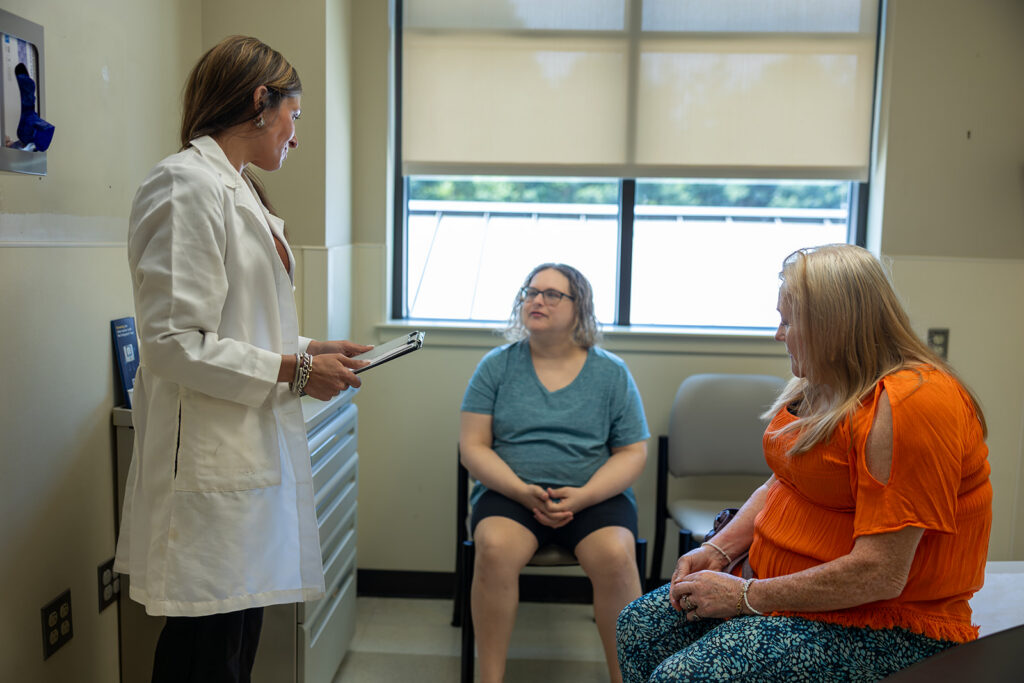
Behind every number is a real visit.
Every percentage on this page lives or dies at the exam-room level. A “blood pressure controlled” number is a real provider, taking a real reading, with a real patient who came in even though it wasn’t easy to get here.
That’s where the work happens. Our measures are just a way of asking, honestly and at scale, whether that work is going well.
Numbers don’t change themselves.
When a measure starts slipping, we don’t just wait for the next reporting cycle. Our quality committee meets monthly to review the data, talk with the clinical teams closest to the issue, and pick a small change to try. Sometimes that’s a new reminder in the chart. Sometimes it’s a workflow change at the front desk. Sometimes it’s a community-health-worker outreach to patients who haven’t been in for a while. We measure, we adjust, we measure again.